Top 10 Control Transformers You Need to Know About?
In the world of electrical engineering, the importance of Control Transformers cannot be overstated. Expert John Miller, a leading authority in the industry, emphasizes, "Control Transformers are essential for ensuring the reliability of control circuits." This statement reflects the critical role these devices play in providing stable voltage for various applications.
Control Transformers are designed to step down voltages, making them safer for control panels and equipment. Their reliability directly affects operational efficiency in many sectors, including manufacturing and automation. However, not all Control Transformers are created equal. Choosing the right one can be challenging due to the myriad of options available.
Users often overlook nuances when selecting a Control Transformer. Factors like load requirements and environmental conditions can significantly influence performance. Thus, understanding these elements is crucial for making informed decisions. As technology advances, the landscape of Control Transformers continues to evolve, sparking further discussions on their optimal use.

What are Control Transformers and Their Importance in Electrical Systems
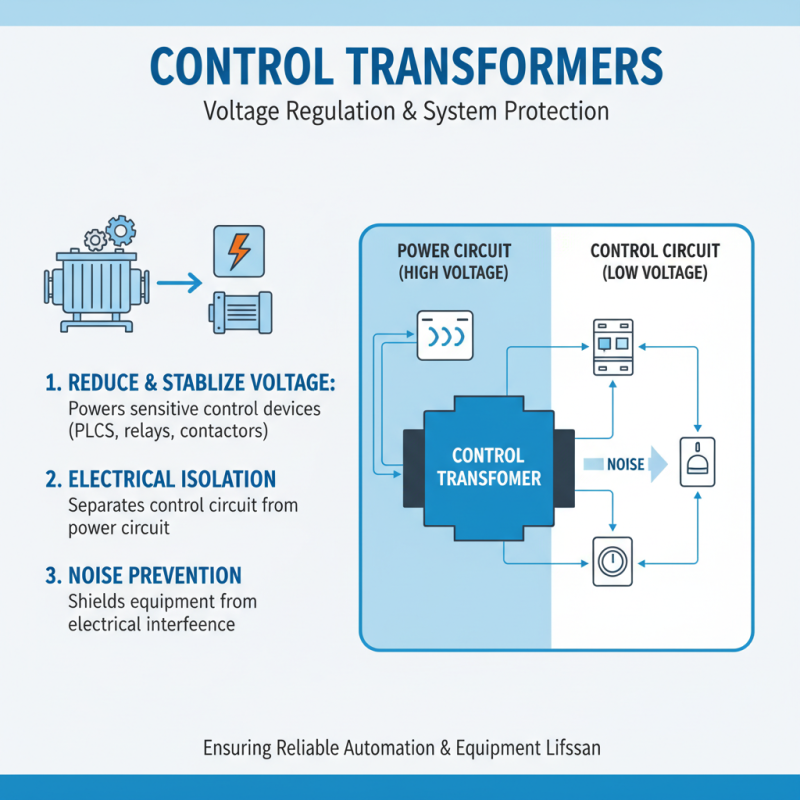
Control transformers play a crucial role in electrical systems. They are designed to reduce and stabilize voltage levels for control and automation devices. This ensures that sensitive equipment operates efficiently. In many setups, these transformers isolate the control circuit from the power circuit. Such isolation helps prevent electrical noise, which can disrupt the functionality of control devices.
Tips: Always consider the load requirements when choosing a control transformer. Make sure it has the right capacity to support your specific needs. It’s essential to ensure the transformer is appropriately sized for the application.
Moreover, the efficiency of a control transformer depends on its design. Factors like core material and winding layout can influence performance. Higher-quality transformers usually bring better stability and longevity. Users should be aware that cheaper options may lead to challenges in function over time. Regular checks can help in identifying potential issues before they escalate.
Tips: Monitor the operating temperature of your transformer regularly. Overheating can signal underlying problems. Addressing these promptly can save you from costly replacements.
Key Features and Specifications of Control Transformers
Control transformers play a vital role in electrical systems by providing the correct voltage levels for control circuits. They are crucial for maintaining system functionality while protecting sensitive components. Key features to consider include voltage ratings, insulation types, and efficiency standards. Industry reports indicate that transformers with higher efficiency ratings can save up to 10% on energy costs annually.
Another important specification is the load capacity. Understanding the required load is essential for selecting a transformer that meets system demands without overheating. Reports from electrical engineering firms suggest that transformers operating at peak load can lead to thermal issues, impacting longevity. Regular maintenance and monitoring can address this concern, ensuring reliable operation over time.
In terms of safety, built-in features like thermal protection and fusing are essential. These features help prevent failures and mitigate risks in the event of overloads. Data shows that systems with robust safety mechanisms can reduce downtime by as much as 15%. Ultimately, selecting the right control transformer is a balance of specifications and operational needs.
Top 10 Control Transformers: An Overview of the Best Models
When considering control transformers, understanding their key features is essential for choosing the right model. These transformers are crucial in controlling voltage levels. They ensure that equipment operates safely and efficiently. The right transformer can enhance performance in various applications, from industrial machines to HVAC systems.
Several vital factors set top models apart. Size, adaptability, and thermal management are paramount. Some units excel in high-temperature environments, while others are compact for limited spaces. Many transformers also offer advanced protection features, such as overload and short-circuit safeguarding. However, not every model meets specific requirements. Compatibility with existing systems can be a challenge.
Exploring user reviews and expert opinions can provide insights into reliability and durability. Real-world performance often varies. What works well in one setting may underperform in another. Look for detailed specifications and application notes. This research will help avoid potential pitfalls in your selection process. Understanding the nuances of each model can make a significant difference in overall satisfaction. Consider every aspect to find the perfect match for your needs.
Top 10 Control Transformers You Need to Know About
| Model |
Power Rating (VA) |
Primary Voltage (V) |
Secondary Voltage (V) |
Weight (kg) |
Efficiency (%) |
| Model A |
500 |
240 |
120 |
10 |
95 |
| Model B |
750 |
480 |
240 |
12 |
97 |
| Model C |
1000 |
600 |
300 |
15 |
98 |
| Model D |
2000 |
400 |
200 |
25 |
96 |
| Model E |
1500 |
500 |
250 |
20 |
95 |
| Model F |
3000 |
1000 |
500 |
35 |
94 |
| Model G |
400 |
120 |
60 |
8 |
90 |
| Model H |
800 |
240 |
120 |
13 |
92 |
| Model I |
1200 |
400 |
200 |
18 |
93 |
| Model J |
600 |
240 |
120 |
11 |
89 |
Applications and Use Cases of Control Transformers in Industry
Control transformers play a vital role in various industrial applications. They are essential for
voltage regulation and control in electrical systems. These transformers provide reduced voltage levels,
ensuring the safety of sensitive electronic components. In manufacturing, they help maintain stable power supplies for machinery.
This protects equipment from voltage spikes.
One common application is in automated systems. Control transformers power sensors and actuators,
keeping operations smooth. They are used in control panels to ensure consistent power delivery.
However, choosing the right transformer requires understanding specific requirements.
Industries often overlook load demands, which can lead to inefficiencies.
In HVAC systems, control transformers support thermostats and control circuits. This ensures proper functioning and
energy efficiency. Yet, miscalculations in voltage ratings can cause issues.
Regular maintenance of these transformers is crucial, as wear and tear can affect performance. Overall,
control transformers are fundamental to industrial operations, but the details matter significantly.
Maintenance Tips for Ensuring Optimal Performance of Control Transformers
Control transformers play a crucial role in electrical systems, often providing the necessary voltage reduction for control equipment. To ensure they perform optimally, regular maintenance is key. According to industry data, over 20% of transformers experience failures due to inadequate upkeep. This statistic emphasizes the importance of implementing a proactive maintenance strategy.
Visual inspections should be conducted frequently. Look for any signs of wear, corrosion, or fluid leaks. This step can prevent minor issues from escalating into major failures. It is recommended to check electrical connections monthly. Loose connections can lead to overheating, which is a common cause of transformer malfunction. Incorporating thermographic inspections can help identify potential hot spots before they become critical.
Periodic cleaning of the transformer and its components is essential. Dust and debris can obstruct heat dissipation. The IEEE recommends cleaning at least twice a year, depending on environmental conditions. The insulation system should also be tested regularly. Insulation degradation can lead to breakdowns and safety hazards. Using insulation resistance testing can help maintain a reliable operational state. Overall, adherence to these tips can significantly reduce downtime and extend the lifespan of control transformers.
Top 10 Control Transformers Performance Metrics
This bar chart represents the efficiency of the top 10 control transformers. Monitoring efficiency is essential in ensuring optimal performance and prolonging the lifespan of control transformers in various applications.

 Three-Phase Isolation Transformer
 Control Transformer
 Medical IT Isolated Power System
 Marine Transformer
 Tunnel Transformer
 High Current Transformer
 Automatic Voltage Regulator
 Oil Immersed Voltage Regulator